The Jewellery Quarter: a guide
Around 700 jewellery businesses in 264 acres of B18 and B3, and still about 40% of the UK's jewellery. Where to buy a ring, three museums that are factories frozen in time, two Victorian cemeteries and a Georgian square.
By Only Birmingham Editorial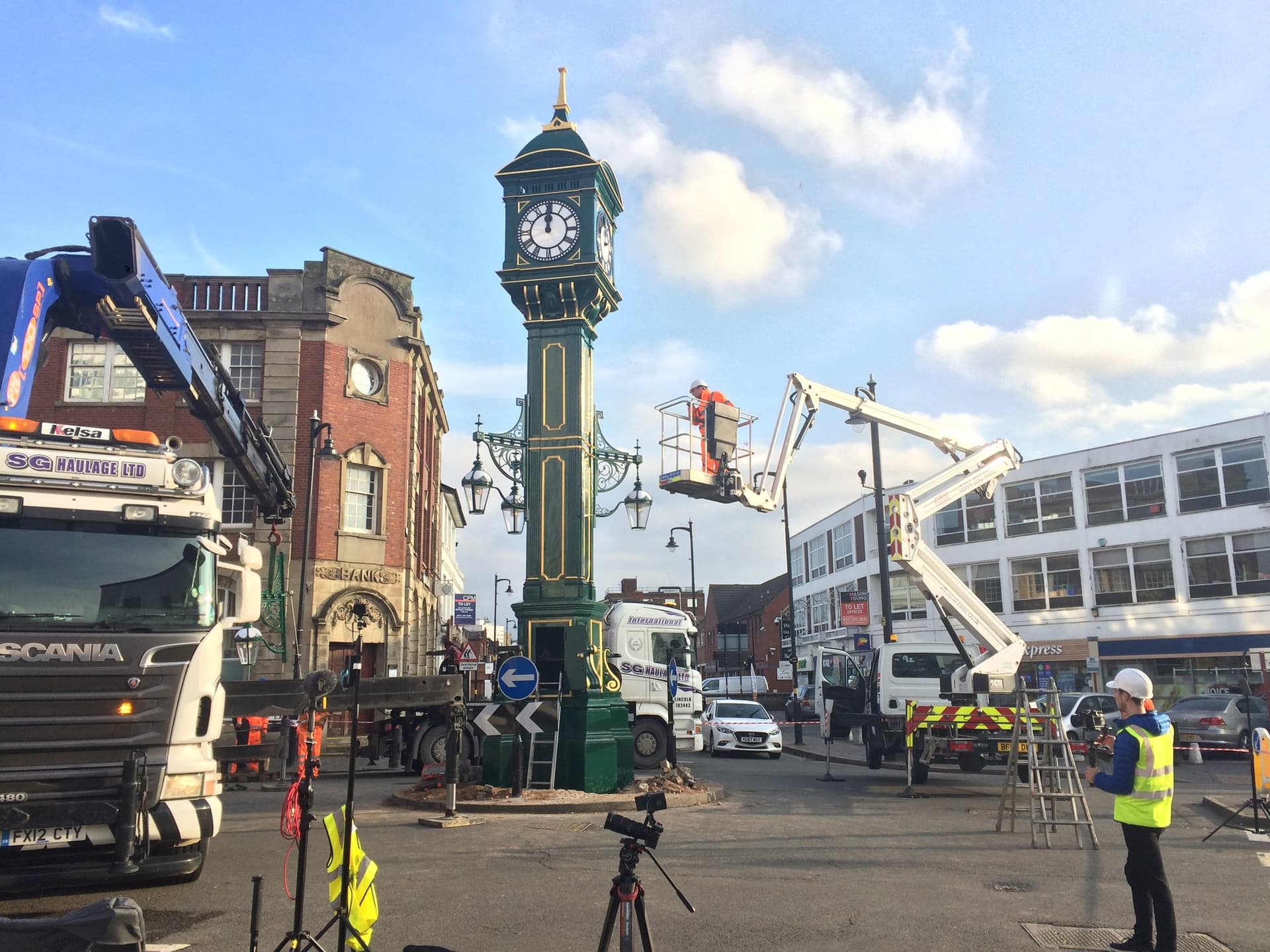
The Jewellery Quarter starts a short walk north west of Snow Hill and runs up to the Chamberlain Clock and beyond, across B3 and B18. Come on a weekday, when the workshops are open and the benches are busy. This is not a heritage theme park. It is Europe's largest concentration of jewellery businesses, around 700 of them, and it still makes about 40% of the jewellery made in the UK. The Quarter has been doing this since the 18th century and sees no reason to stop.
The trade
A directory of 1780 lists 26 jewellers here. By 1965 there were 900 firms employing 8,000 people, and by 1985 it was 600 firms and 4,000 people. The numbers have come down, but about 400 of today's businesses are manufacturers, and many of the shopfronts on Vyse Street and Warstone Lane are workshops with a counter at the front. If you want an engagement ring, a repair or something made from scratch, come here and buy it from the people who make it.
The Quarter is also home to the Assay Office, set up in 1773 and now the largest in the world, hallmarking around 12 million items a year.
Buying in the Quarter
A few house rules from people who have done it. Know your budget and your metal before you walk in. Ask who made the piece and where; in the Quarter the answer is often upstairs. Ask about the hallmark, and where the piece was assayed. Get a written quote for anything made to order, with a date. And take your time: there are hundreds of businesses within a few streets, and nobody here minds you comparing.
Three museums, three factories
The Quarter's museums are not galleries. They are workshops where someone shut the door one day and nobody touched anything.
- Museum of the Jewellery Quarter, Vyse Street. The Smith and Pepper works, whose owners retired in 1981, locked up and left everything where it was. Entry is by guided tour only, about 45 minutes, Thursday to Sunday from 10.45am to 3.15pm. It is ticketed and worth booking.
- Coffin Works, Fleet Street. Newman Brothers made coffin fittings, including those used at the funerals of Winston Churchill, Princess Diana and the Queen Mother. The stock, tools and machinery are all still here, and some of the machines work again. The building is Grade II* listed and opens from 10.45am; check the days before you go.
- Pen Museum, the Argent Centre. Birmingham once filled the world's inkwells: around 100 companies sold steel pens here in the 19th century. The museum, open since 2001, is in a Grade II* listed former pen factory.
The Chamberlain Clock
The Chamberlain Clock was built in 1903 to mark Joseph Chamberlain's visit to South Africa, and unveiled in January 1904. It is the Quarter's meeting point and the obvious place to start a walk. The jewellers fan out from here in every direction.
St Paul's Square
Towards the city centre is St Paul's Square, the Quarter's Georgian square. The square and its church were built between 1777 and 1779, and the spire was added in 1823. These days the terraces around it are bars, offices and restaurants, among them Lasan on James Street, which has been cooking Indian food here for two decades. On a summer evening the grass in the middle fills up with office workers who should have gone home hours ago.
The cemeteries
Key Hill Cemetery opened in 1835 and Warstone Lane in 1847. Both are closed to burials, both are listed, and both are on the national At Risk Register. They are worth an hour: Victorian monuments, the graves of the families who built the trade, and very few people. Go in daylight and stick to the paths.
Getting there and getting around
Jewellery Quarter station is shared by trains and the West Midlands Metro, which arrived in 1995 and 1999. From the city centre it is a short walk from Snow Hill to St Paul's Square. The whole Quarter covers about 264 acres, so you can cover the main streets on foot in an afternoon. The area became a single conservation area in 2000, which is why so many of the old works, signs and shopfronts are still standing.
A day in the Quarter
- Morning: the 10.45am tour at the Museum of the Jewellery Quarter.
- Late morning: a walk along Vyse Street and Warstone Lane, window shopping or buying direct from the bench.
- Afternoon: the Coffin Works or the Pen Museum, then Key Hill or Warstone Lane cemetery.
- Evening: dinner around St Paul's Square.